 Cutwright
Dressing the show
Graphics, captions, music and pictures from elsewhere, laid over the cut. Each is placed by what is in the program (a word, a segment, the program's start), so it moves with the cut when the cut changes.
Graphics
Every graphic comes from your show's graphics package: its fonts, colours, sizes and the way things move in and out are the package's, the same every episode. The director only chooses which graphic, what it says and when. It never picks a colour, a font or a position.
| Template | For |
|---|---|
| Lower third | A person's name and role, the first time they speak. |
| Chapter card | A new part of the conversation, numbered. |
| Pull quote | The line that is the point of the moment, word for word. |
| Callout | A note pointing at something in the picture. |
| Chart | A few numbers said aloud: bars, a line, or one big figure, built on the word that names each. |
| Diagram | A process or a cycle as boxes and arrows, revealed as each is named. |
| Sketch | Marks drawn on the picture as if by a pen: a circle, an arrow, an underline. |
| 3D element | A lit object turning: a globe, a microphone, the title in relief. |
Dress it.
It runs one graphics pass on the finished cut: a lower third for each person at their first sustained words, a chapter card at each chapter of the outline, a pull quote for each quote worth keeping, a chart where numbers are said. Each is drawn before you see it, so nothing it offers overflows, covers a face, spans a cut or is up too briefly to read. It keeps the ones that earn their place, words them, and proposes them together.
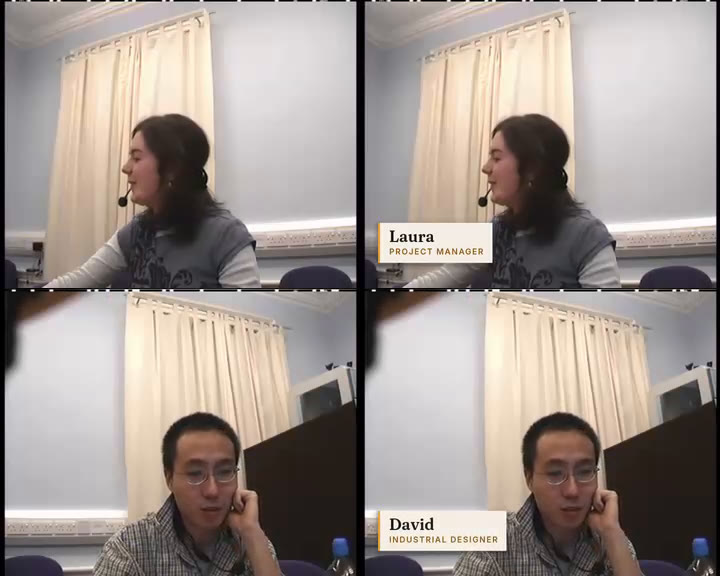
The checks hold every graphic to its limits: the text fits, it is up long enough to read (a hold the package sets from its words), it stays in the safe area, it contrasts with what is under it, it is never stacked on another or left across a cut, and it keeps off faces.
Captions people post
For anything watched on a phone: lines of one to three words, broken by phrase, the word being said lit as it is said. Removed words and kept fillers are never captioned, because the lines come from the words the program plays. Three looks (bold, box, clean), low or high in the frame, off the faces under them; burned into the picture or kept as their own track, and always written as SRT and WebVTT. The plainer sentence captions of a broadcast cut are there too.
Captions on, the boxed look, burned in. And it's Craig, not Greg.
It sets word-by-word captions with the box look, burned in, and fixes that one word's spelling in the captions only: the transcript keeps what was heard.
Credits, title cards and black
Picture that is not footage is a segment of its own: black, a colour from the package, or a still. It moves, joins and comes out like any segment, and can be as long as its graphics need. Under it the room's own tone plays, or silence when the beat is meant to be dead quiet.
End on credits: the corpus licence needs naming. Then a beat of black, and the outtake after it.
It adds a black segment after the story, as long as the credits need, and the credits over it, rolling at a speed worked out from their words, or a page at a time. You are credited as the editor, by your name; it never credits itself. Then a second of black, and the outtake.
A title card standing alone before the first shot works the same way, and a dissolve into and out of a black segment fades the show to black and up again.
Music
You bring the music, and say what it may be used under. The director places each cue by what is in the program (the program's start, a segment's end, a word) and never picks a track you have not given a licence for without telling you.
Lay the theme under the introductions and let it go when Laura starts the brief.
It brings the theme in at the program's start and fades it out on the segment before the brief. Cutwright sets the level: between speech the music sits 8 LU under the voices, and while anyone speaks it ducks to 20 LU under the quietest voice, down before the first word and back up after the last. The check hears every phrase over the music and flags one that is too close to it.
B-roll
Other footage laid over someone who keeps talking: the picture cuts away and back, the sound runs on, the length does not change. A product shot, the room, a screen recording, a phone clip from another day, or another moment of your own recording. The director finds it by what it shows.
When he talks about the prototype, show the shot of it on the bench.
It searches the B-roll for the prototype on a bench, lays the best shot over his words from where he names it, two to six seconds, and moves an edge onto a cut a few frames away so no sliver of another shot shows. It never lays B-roll over a punchline, a laugh, a reaction or someone being introduced: the face is the point there.
Your logo and a sponsor's card
Your own artwork, a PNG or an SVG, goes into the project as it is: never changed, kept by its content, with the licence or permission you state for it. The package draws it with its own moves: a small bug in a corner for the whole program or a stretch of it, or a sponsor's card over the full frame, on a segment of its own or over the picture.
cutwright artwork add my-show logo.svg --name "Kick-off Weekly" --licence CC0-1.0
cutwright artwork add my-show sponsor.png --name Wavelight
cutwright artwork list my-show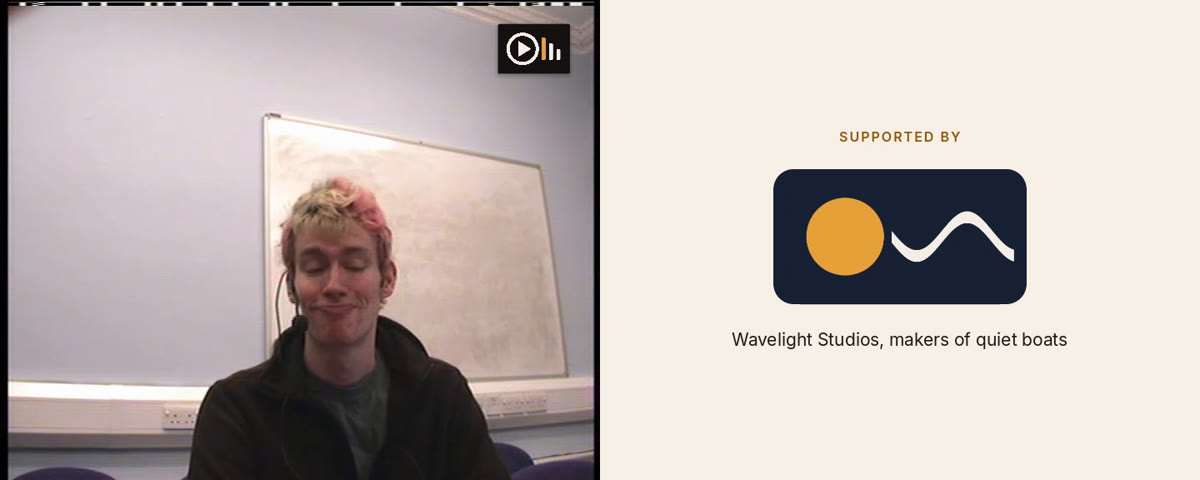
Open on the sponsor's card, and keep our logo in the corner the whole way through.
It adds a segment as long as the card's words need, the card over it, and the bug from the program's start to its end. Each is checked to stand out from what is under it: straight on a busy picture, the logo is flagged at the frames where it would not read, and the director puts it on the package's plate. Artwork with no licence stated is flagged wherever it is used, before anything with it is published.
Captions and chapters in other languages
A translation says each line in another language and names the first and last word it translates. Cutwright times every caption from those words, so the captions stay on the words they translate whatever the cut does around them, and writes SRT and WebVTT per language. A long line is broken where a subtitler would break it, after a clause, and each part takes the words it says. Chapter titles are translated too, for the description.
Add Spanish captions and chapters.
It translates the cut's lines, each over the words it says, and the outline's chapter titles. A line read faster than 17 characters a second is flagged: the fix is a shorter line. If a later cut removes words a line translates, the check says which, so the line is fixed rather than left saying what is no longer heard.
cutwright export my-show director_cut --format srt --language es

1
00:00:00,000 --> 00:00:03,800
Laura: Bueno, esta es la reunión de
arranque de nuestro proyecto.
Cartoons from Reelwright
Reelwright makes cartoons by talking. A stretch of a Reelwright episode can be cut into your program as a cutaway, or, rendered with a see-through background, drawn over it as a cover while the person keeps talking. You render it into the project; the director cuts it in by its shots. Its sound comes as Reelwright's stems (dialogue, effects, music and foley), each mixed with the program's own.
cutwright reelwright fetch
cutwright insert add my-show --show ~/shows/marigold --episode ep.lighthouse_cold_open --name lighthouse
cutwright insert status my-show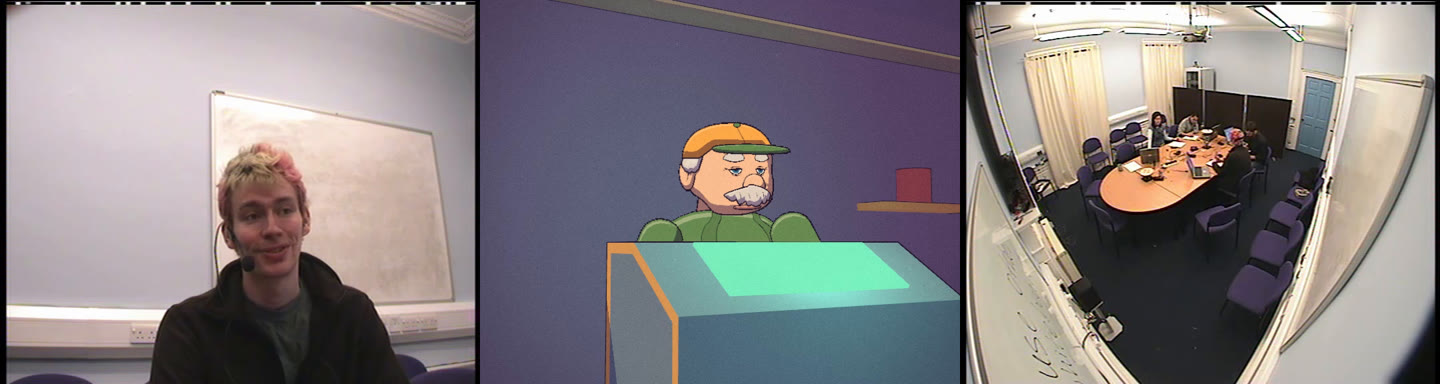
Put a Marigold gag after the ice-breaker.
It reads the insert's shots and lines, finds a run of shots that lands as a joke on what
the team has just done, and cuts it in after the ice-breaker, the meeting's words whole on
either side. Inserts are only ever the person's to render; when the show changes,
insert status says the insert is stale and insert refresh renders
it again.
Shorts
From one recording, several vertical clips for social, each its own edit. Cutwright scores the recording for its strongest self-contained moments: whole sentences, a laugh kept to its end, never a punchline without its setup, housekeeping scored low.
Find three shorts, 30 to 60 seconds, vertical, with captions, and tell me why each.
It reads twice as many candidates as you asked for, chooses the ones that stand alone for someone who saw nothing else, and makes each a 9:16 edit with word-by-word captions burned in, the crop following the speaker. Each comes with a one-line reason, and is rendered and checked like any cut.
The publish kit
What goes with the cut when it is posted: chapters placed in the cut from the outline, three to five titles, a description, hashtags, a short's caption, and a thumbnail: a frame ranked for a big, sharp face at a laugh or a kept line, with a few words set large in the show's package, off the faces and out of the player's timestamp corner.
Write the titles, a description and chapters for YouTube, and pick a thumbnail.
It words the titles and description from what is said, quotes people only by the words they said, and never types a chapter time or a credit: Cutwright adds those from the data. The thumbnail is drawn and checked before you see it.
cutwright publish my-show director_cut --out kit/The kit is written as files: chapters for YouTube, WebVTT and MP4 markers, the titles, the description, the thumbnail and the frames it was chosen from, and the MP4 with its chapters when the cut is rendered.